Friday, January 20, 2017

Mock Caldecott 2017

I started late this year, but I decided to do a Mock Caldecott election with the Kinder and first grade students. Last week we discussed the Caldecott Award and Caldecott Honor and that the awards are for the best picture book.  We discuss how the illustrations often give more detail and are very important to the story.

I showed them last year's winners and read Finding Winnie and Last Stop on Market Street. I pointed out the different techniques that the illustrator used, specifically the cut paper technique that Christian Robinson uses in Last Stop on Market Street.


I then chose the books we will be voting on for our Mock Caldecott. I follow a few book gurus on Twitter that helped me make me decision for out books, such as John Schu and Travis Jonkers.  I decided this year, since we are starting late, we won't have a lot of books to choose from. We will start with only six.

After deciding on the books for this year, I created a ballot that the students can fill out after we read each book.

This week we read Samson in the Snow, which is about a woolly mammoth named Samson, who loves dandelions and desparately wants a friend. He encounters a red bird who wants to cheer up her friend whose favorite color is yellow. A blizzard comes, and Samson begins to worry about the little red bird, so he wanders off to find her. The picture book is wonderful for making predictions, and the illustrations add so much detail to the story.


Next week, we will read another picture book that just might be the 2017 winner!  (p,s. Even though the real winner is announced next week, I won't tell my kids until we are done. LOL!) 

I can't end the week without letting you see my Jamberry manicure that held up all week long and still looks fabulous! And a sneak peek of what we will read next week. 

Wednesday, January 18, 2017

4th Grade Immigration Collage Project

This week at the Hillside Library, 4th grade students are learning about immigration and the effects it has on people and a country. Students chose a country to research and find out about the immigrants from that country. There project was to find and choose images that depict immigrants from their chosen country. Then put together a collage of images/photographs. 


The first step, was to learn more about the country where the immigrants come from. Students used books and online databases to find information. The 4th grade teacher set up the instructions for the project in Google Classroom, along with some of the websites they could use to research. I reviewed how to find information in the online encyclopedia and how to cite our sources. 


The next step was to find the images. I showed the students the online database for photographs we use in our district, Britannica Image Quest. The classroom teacher and I went over how to download the image into the students' Google Drive, as well as how to create the citations for the image. 


The biggest benefit of the flex schedule this year is having two teachers (myself and the classroom teacher) helping students with technology and steps of research. It has made a huge difference in the quality of work. 


Friday, January 6, 2017

Friday Wrap up, New Year, and SNOW!

We are already a week into the year 2017! We have only been back at school for 4 days, and the library has already circulated over 1,100 books. It makes me so happy to have such avid readers here. 


No time was wasted this week, and everyone dove right into working and researching. Third grade is learning about landforms, so the teacher and I collaborated on ways to make it more meaningful. She found a passport, and I provided the lesson on using Google Earth and our online World Atlas. Students were given the task to find information on different types of landforms, then to locate famous landforms using Google Earth and illustrate in their passport. 


The students and I had loads of fun searching for landforms using Google Earth. We looked at some of the volcanoes in Hawaii and mountain ranges in Europe. One group even viewed Death Valley! 

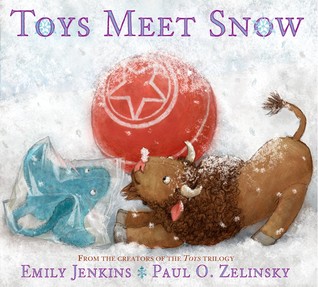
In kinder and first grade, we discussed the difference between fiction and nonfiction. I forgot to take pics, but we made a t-chart to show the difference. We learned that fiction is to entertain and nonfiction is to inform. I used the book TOYS MEET SNOW by Emily Jenkins as the fiction book and WHO LIKES THE SNOW by Etta Kaner as the nonfiction example. If you have not read TOYS MEET SNOW to your students, it is a must read and a must have for your elementary library! 


To wrap up the week, it SNOWED!! It is hard enough to concentrate on a Friday, but to add on snow! We don't see snow very often here in Texas, so the students were all abuzz with excitement this afternoon. 


Also, to wrap up the week, my manicure has lasted all week through numerous book repairs. I love these Jamberry nail wraps!!  


Friday, December 16, 2016

Holidays Around the World with 3rd Grade

WHAT?!?! Christmas is almost here!! What happened to the year? The library has been very busy the past 2 weeks with holiday madness! Students working hard to reach their reading goal, and lots of research for assignments.

The third grade teachers asked if we could work together on Holidays around the world. This is my absolute favorite time of year, and one of my favorite units I taught as a classroom teacher. SO, I was more than excited to work with the students on this project.

The students chose a particular country to research the traditions and customs for their Christmas holiday or Winter holiday. I pulled a series of nonfiction books for them to research first. We went over the research steps and they recalled that we had to organize our research. So, together we came up with an organizer and in groups they came up with questions they needed to answer in order to complete their project.


First they searched through the books and organized the new found information on their charts. After using the nonfiction books, students were allowed to search on websites. We use Santa.net and Northpole.com, both websites I reviewed before hand. I even had a student ask me if the information was reliable!! It makes me so happy when they listen to my lessons!!

The next day, the class came in to begin work on their project. Each group was given an option of their final product to showcase their country's traditions. Students could choose to create a poster, book, Google Slide show, Diorama, or a video. I was surprised that most groups chose differently.


This group decided to create a Google Slide presentation about Christmas traditions in Sweden. They are using the ChromeBooks we have in the library. 

These students are working on a book while using the iPad to find relevant information. 


This table is working on a poster.

I had another group create a diorama, but they weren't finished at the end of our time. They wouldn't let me take a picture since it wasn't finished, but I was AMAZED at their work. 

I can't wait to see what happens at the Hillside Library in 2017! 

Thursday, November 17, 2016

Theme, Poetry, and Susan Stevens Crummel

This past week has been super busy in the Hillside library with all sorts of learning! When we return from the Thanksgiving break, we will have an author visit. We are very excited to have Susan Stevens Crummel visit with all grade levels.

My plan is to have a bulletin board displaying student work pertaining to Susan Stevens Crummel's books. With first grade this week, I read aloud the book PLAIDYPUS LOST.  The students loved the repeating text, and read it in chorus with me. After reading the story, the students created their own platypus. They designed the pajamas, and we added patches with pieces of scrapbook paper. I loved how they turned out, and can't wait for Susan Stevens Crummel to see all of their work.


Last week, a third grade teacher approached me and asked if she could bring her class in for a lesson over theme. They had covered the skill in class, but needed a little extra practice. I decided to use the picture books by Susan Stevens Crummel for the lesson. First, the teacher and I went over theme, and I made an anchor chart while we taught/reviewed. (I did not take a picture of my anchor chart, it was not pinterest worthy.)  We taught the students a great way to remember THEME is that it is THE MEssage that the author wants the reader to learn. The students then brainstormed some common themes we see in literature, such as perseverance, teamwork, honesty, and responsibility to name a few. 

I read aloud one of my favorite books, THE LITTLE RED PEN by Susan Stevens Crummel. The students loved the book, especially the pushpin AKA Señorita Chincheta. After reading the book, we brainstormed together the theme of the story. The students came up with "Teamwork, "Don't Be Lazy", and "Never Give Up".

Next, the students were paired up by their teacher, and I brought each pair a book by Crummel. Their job was to read the book and together decide what the theme was. They also had to include text evidence to prove their theme.  


As you can see from the picture our tables were missing, so we had to be flexible. Hillside had our Blue Ribbon celebration that day, so all of the library tables and chairs were being used for the celebration. We still work hard and learn in the library, even without chairs! 


Fourth grade has a unit over poetry this month, specifically figurative language this week. The fourth grade ELA teacher and I discussed a lesson together, and we decided to use the book 'TWAS THE NIGHT BEFORE THANKSGIVING by Dav Pilkey. The fourth graders all wanted to go down to the rug, so I read the book in our reading area to them. We then reviewed personification, simile, and metaphor. 


The assignment was to create a Popplet (www.popplet.com) and categorize the 3 types of figurative language from the poem. I did type out the poem for the students so they could have the text in front of them to find the examples. 


Whew! Just one more day until our Thanksgiving break!!
SaveSave

Tuesday, November 8, 2016

I Can't Believe I Haven't Blogged in a Month

I'm still here, nothing happened, except for an extremely busy October!!! However, it was a good busy, including a book fair, book character pumpkin contest, book character day, and collaborative lessons every week!

The book fair was an enormous success and tons of our readers were able to purchase books for their personal libraries at home. Plus, the library gets to keep the proceeds to purchase new books, new technology, and other fun things for the students. Last year's book fair proceeds helped me to buy new biography books, 6 new Chromebook laptops, lunch for the Bluebonnet club readers, supplies and materials for the MakerSpace, and breakfast for all the students that read over a million words. This year, I plan on purchasing more books to update the nonfiction section, more Chromebook laptops, and incentives for my super readers again.


One of my goals each year is to teach the students to be independent in the library. I want them to think on their own and know how to search for books on their own. I teach the students early on to self-checkout their books. This past month, students in first grade learned how to use the library catalog to search for books by author, subject, and series.


This year, one of the district's initiative is to help our students be future ready. Librarians play a huge part in this, so all the elementary librarians met with our district library coordinator to write goals to ensure our library programs are future ready. One of the goals I wrote for my library is to provide a flexible schedule in order for more classes to be able to participate in research and for teachers to collaborate with me on what needs to be taught. The first 2 six weeks have passed, and so far this goal is a success! The students love coming to the library for lessons, and the teachers are appreciative of the extra help in teaching the skills. 

One of the third grade teachers recently approached me regarding poetry. This teacher is new to third grade, and didn't feel really comfortable teaching poetry skills. So, we discussed the objectives and what was expected of the students together. Looking through the curriculum, we decided to focus on 4 types of poetry that will be on the 3rd grade state assessment. I found examples of these poems and posted them all around the library. After going over the 4 types of poems in a whole group, the students were put into groups and went on a scavenger hunt around the library for the different types of poems. They had to identify the type of poem, but also tell why they thought it was that type of poem. 


If you cannot tell, I am a HUGE advocate for flexible schedule in the elementary library. I've heard so many people say it cannot be done, but I am proof that it can be done and it can work well. Flexible schedule is better for the students, and the lessons are more meaningful when they are tied in with the curriculum.  

A few weeks ago, fourth grade classes came in to the library after the teacher and I collaborated about teaching Theme in Fables. In September, this same teacher and I taught a lesson together about genres, so we decided we would continue this lesson each month and take it further. This week we focused on fables, and the required skill from the district curriculum was theme. 


The best part of collaborative lessons is that their are 2 teachers helping the students. We are able to give more one-to-one help when there are 2 of us to monitor and check for understanding. For the lesson, the teacher and I took turns explaining theme and how to look for the clues in the story. The students then got on the Chromebook laptops and went to a website I gave them with a list of fables. With their partner, they were able to choose a fable to read, then fill out a graphic organizer with clues to determine the theme. 


So much more to tell you, but my fingers are getting tired and this is turning into a novel. Later this week I will post the Book Character pumpkin patch pictures. It was so hard to decide the winner this year! Also, this week I have second graders coming in for colonial research.