Thursday, March 8, 2018

Stations and Google Hangouts

Someone once told me that a flexible schedule wouldn't work on their campus because they wouldn't be busy enough. Their principal wanted to see them busy, so a flexible schedule would not work.  

Well, let me tell you, a flexible schedule does not mean not busy! I am busier now than I was when I started at this campus and we were on a fixed schedule. Our library stays very busy with all sorts of activities. And I love every busy moment!

Figurative Language Stations

The third grade teacher approached me last week and asked about doing an activity in the library with figurative language. They had been learning it in class, but needed some extra practice. So, she taught the skill and reviewed in the classroom, and I set up stations for the students in the library.

Each station focused on a certain type of figurative language: simile, metaphor, personification, hyperbole, and onomatopoeia. At each station I placed a photograph with examples of figurative language. Students were tasked with matching the figurative lanugage with the photograph, then writing their own. For example, at the hyperbole station, they had to locate the sentence that contained a hyperbole describing the photograph.

Each station also contained a paragraph that students read and located the types of figurative language. There was a lot of great conversation at the stations. I especially loved that some of the students felt safe enough at the end to ask the teacher and me to go over some of the stations again. 


Two of the stations were a little different than the rest. At the Onomotopeia station, students had book to look through and find examples. Then, they added to a graffiti poster examples of onomotopeias with pictures. Someone drew a stormtrooper with the words "pew pew" beside it. It was greatness!! 

I added a station for comparing similes and metaphors. At this station, students had to look at sentences and really analyze them by telling what two things were being compared, if it was a simile or metaphor, and why. 


Guest Meteorologist

One of our fourth grade teachers connected with a meteorologist, Tim Brice, in El Paso that works with NOAA. The fourth grade classes had just completed their unit on Weather Changes. All fourth grade classes came to the library to listen to the meteorologist speak. He showed them types of weather maps, satellite images, and their workstations. My favorite image he showed us was a slow motion video of lightning. I never realized lightning was so beautiful! 

After his presentation, students were able to ask questions. It was an amazing experience to be able to connect and interact with another professional through Google Hangouts. 


Friday, March 2, 2018

Family Literacy Night

Our campus hosts an annual Family Literacy Night that falls around Dr. Seuss's birthday, so what better theme to use the Dr. Seuss's books!

In the past, I would host the book fair on this night for parents to shop. While I made good sales on this night, it was too much to plan the evening, plan Read Across America Week, and have book fair. After breaking out into hives last year, I decided book fair could be another week.

Our families always have a great time at our reading night. The favorite activity is the trivia scavenger hunt. I hang up cards that have paragraphs from a Seuss biography. Each family gets a page with questions that can be answered by looking for the information on the cards. Some of the answers can also be found on the Seuss biography website.

Hat Making Station

What better way to celebrate Dr. Suess than to make our own tall, striped hats.  Kids could use crayons, markers, washi tape, dot markers, and stamps to make their own hat creation. They enjoyed wearing them the rest of the evening and showing off their creations.


Bookmark Creation Station

My favorite station is where families can create their own bookmarks.  At the station are blank bookmarks to start the creation. Washi tape, crayons, stickers, and markers are provided at the station for use. We also set out popular Dr. Seuss quotes that can be copied onto the bookmarks.

I love to see all of the unique creations that students come up with.


Comprehension Cootie Catchers

This is a favorite station with the older elementary students, and parents love that they are taking home comprehension questions for their kids. At this station, students make a cootie catcher, also known as fortune tellers. We have ones with comprehensions questions for nonficion text and another for fiction text. Inside the cootie catcher, or fortune teller, are questions that parents can ask their child after reading a book. This is a fun way for the whole family to be involved in reading.


Story Times

You can't have Family Literacy Night without story time!! Our principal read OH THE THINKS YOU CAN THINK and I read GREEN EGGS AND HAM.


Boggle 

This is another fun station for the older students, and it is a great challenge for our academically gifted students. If you've never played Boggle with your students, you need to try it out next week! When I was a classroom teacher, I had a different Boggle board in a Daily 5 station every month.

Boggle is a word game that has 16 random letters in columns and rows. The object is to find as many words as you can in the grid. You can move in any direction, but letters must be touching in a chain.


Relay Races Cat in the Hat style 

In previous years we had Seuss Bingo, but I thought we would change it up a little and have relay races. Since our theme was Dr. Seuss, we decided to go relay races Cat in the Hat style.  We had several challenges. 
  • How high can you stack the cups. 
  • Skip backwards while saying the ABCs backwards. 
  • Juggle 3 or more items at a time. 
  • Balance an object on a spoon while hopping. 

Green Eggs and Ham Hunt

This one is a hit with the younger students. We write sets of rhyming words on green easter eggs and place them all around a classroom. The object is to find pairs of rhyming words, then pick out of a prize box.

Tongue Twisters

I got the idea of this station while reading FOX IN SOCKS to a class one day. We printed out tongue twisters onto strips of paper. Families took turns trying to say the tongue twisters as fast as they could without messing up. This helps with fluency. Then, they could write their own tongue twisters on the blank strips of paper.

Photo Booth

This was a hit! I bought these fun photo props at Party City!


Read Across America

This is one of my favorite weeks of the whole school year! This week celebrates the love of reading, and it really motivates the kids to read. Even those that love to read anyway get excited to celebrate Dr. Seuss. The older kids don't really read the Dr. Seuss books anymore, but they love this week when they get to be silly and enjoy the amazing rhymes.

Dress Days

Each day of the week, we focus on a different Dr. Seuss book. The staff and students dress up different ways each day.
  • Monday - wear orange or a mustache for THE LORAX 
  • Tuesday - wear stripes like the cat's hat or wear a hat for CAT IN THE HAT
  • Wednesday - wear crazy socs for FOX IN SOCKS
  • Thursday - wear read and/or blue for ONE FISH, TWO FISH, RED FISH, BLUE FISH
  • Friday - wear green for GREEN EGGS AND HAM 


Guest Readers 

The purpose of this week is to place a focus on reading. While I do that all year long, I really try to pump this week up with extra motivation. We had some fabulous guest readers this year, and the students absolutely loved the opportunities. They always hear their teachers or me reading, but this week they were able to see that other adults enjoy reading also. 


The superintendent read ONE FISH, TWO FISH, RED FISH, BLUE FISH to a first grade class.


Our district library director brought Patsy Swine and read with our kindergarten class.


Our area director read to a first grade class, WHAT PET SHOULD WE GET?

Our principal reads THE LORAX to 2nd grade classes. 

Our assistant principal reads GREEN EGGS AND HAM to kindergarten.

Read-A-Thon

To celebrate Read Across America, we have an annual Read-A-Thon. Our goal this year is to read 33,000 minutes and to raise $1,000 to purchase new books for our library. 


Breakout

The most fun was putting together the BreakoutEDU games for 4th grade and 2nd grade classes. I found a Seuss themed Breakout, where Thing 1 and Thing 2 get upset and lock away the cat's hat. One of our 4th grade classes solved it in under 10 minutes! I kid you not!!! 

The clues were scattered around the library, thanks to Thing 1 and Thing 2! They hid the keys underneath a stuffed Cat in the Hat, and even hid the secret blacklight flashlight in the locked box. So the students had to find the key in order to find one of the clues that was written in invisible ink.  Other clues were hidden inside the book, CAT IN THE HAT. While other clues had to be researched using PebbleGo or the online encyclopedia. 

2nd graders broke out, found the hat, and a few surprises in the box. 

Friday, February 9, 2018

2nd Grade Biography


One of my favorite projects every year is the biography project in 2nd grade. Students get to choose a famous person, an athlete, celebrity, president, author, etc... The final project is to write a report about their person and give a presentation. The presentation is my favorite part!! The students dress up as their person and present their report as if they were that person. It is so cute!!

I collaborate with the 2nd grade teachers on this project in various ways. I pull books appropriate for the reading levels of the students. This year, the teachers asked if I would help with note taking skills and citing sources.

I tried and tried to find a note taking organizer that would help the students, but I could not find one I liked. So, I made my own. 😊 You are welcome to use it however you'd like.

I wanted to model note taking to the students, so we researched Barbara Park together. Junie B. Jones is a very popular series in 2nd grade right now, so they were all excited to learn more about the author. We started with Pebble Go. I had the students read the page, and as a table group, come up with an important fact we could write in our notes. 


We talked about the importance of taking notes:
  • writing down the most important information
  • putting the information in our own words (don't copy from the page)
  • write down the information in a short way. 
On the organizer, students have a space to take notes from each source, and a space to cite their sources. This gets them ready for upper elementary when they have to create a bibliography page with their sources. 

After we took notes from PebbleGo, using bullet points for each fact we found, students filled out their sources. Then we used a book about Barbara Park and followed the same steps. 


After modeling, students then used PebbleGo, their books, and other reliable sources that the teacher and I had looked up before hand, to begin taking their own notes. 


They will continue their research over the next two weeks, then make their presentations in class. I always love to see the students dressed up as their famous person. 

Saturday, February 3, 2018

Favorite Picture Books of 2017

If you've been keeping up with my blog, you know that my passion is collaborating and co-teaching with the classroom teachers. However, I also really love story time! Especially with kindergarten and first grade students. There is just something magical in the way that the students will sit and listen to a story being read.

I have compiled my top 10 favorite books that I read aloud to classes in the year 2017. These books were not necessarily published in 2017, but they were books I chose to read aloud during the year 2017 to my students.

***These are in no particular order.***

La Princesa and the Pea

One of my favorite fairy tales from when I was little was The Princess and the Pea. This is a latino take on the original story. The author incorporates Spanish words into the story, so it was really fun to read with our bilingual class. They enjoyed telling me when I said the word wrong and praising me if I said it correct the first time.

The rhyming text makes it fun for a read aloud, and the illustrations are gorgeous! This is perfect for multicultural, fractured fairy tales, and trickster tales!

Elyn, Susan Middleton. La Princessa and the Pea. G. P. Putnam's Sons Books for Young Readers, 2017.


We Found a Hat

I love Jon Klassen's Hat trilogy, but it is dry humor and not everyone appreciates it. For example, the first of the triloly, I WANT MY HAT BACK, is not something that I would read to my kinders. I don't think they would understand it. This book, though, was not quite as deep and some of the gifted kinders could understand. My first graders and second graders found it to be hilarious! 

Two turtles find a hat. They both want the hat, but there is only one hat. What ever will they do? The ending is so sweet, but the best part is that students have to make inferences to really know what happens.  
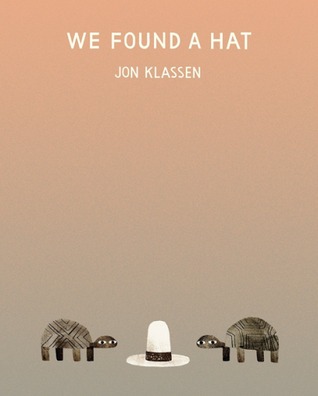
Klassen, Jon. We Found a Hat. Candlewick, 2016.

The Grumpy Pets

Billy is a grumpy child, so his mom takes him to the pet store to pick out a pet. Billy does not want a cheerful, cute, playful pet. Then, Billy finds the pets in the back of the pet store. These pets are grouchy, and a bit grumpy just like Billy! 

This is a great read aloud for younger students. The kids laughed out loud at the faces that Billy made, and then all the antics of the pets in the store. There were quite a few oooohs and awwws at the end of the story, too. 

Lombardi, Kristine. The Grumpy Pets. Harry N. Abrams, 2016. 

School's First Day of School

I knew I would love this book when I saw that it was illustrated by Christian Robinson. He is one of my absolute favorite children's illustrators. 

I read this to kinder and first grade back in September when everyone was back at school. It was especially great for the new kinders and all our new first graders. Everyone is nervous the first week of school, but did anyone ever think about how the school building feels the first day of school? In this story, the main character is the school building, who talks to the janitor each day. The school is really nervous about school starting, but everything turns out great. By the end of the day, the school decides he wants the children to come back. 
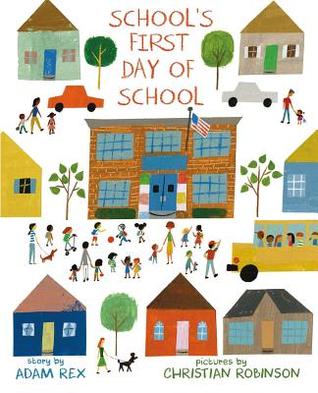
Rex, Adam. School's First Day of School. illustrated by Christian
 Robinson. Roaring Book Press, 2016. 

Samson in the Snow

Samson, a wooly mammoth, has a dandelion patch, which is his favorite flower because yellow is his favorite color. While tending to his dandelions, Samson meets a red bird. The red bird asks if he can have just 3 dandelions to give to his friend, who loves anything yellow. Samson allows the bird to have the flowers, then begins to dream of what it would be like to have a friend. He wakes up to snow everywhere! On his journey through the blizzrd, he finds the mouse and offers him shelter. Samson finds out the mouse is looking for his friend, that turns out to be the red bird! A beautiful story of friendship and kindness. 

Stead, Philip C. Samson in the Snow. Roaring Book Press, 2016. 

Good Night Owl

If you do not own any of Greg Pizzoli's picture books, I implore you to buy some for your library this week!! He is a fabulous author, and the kids love his books. 

Good Night Owl is about an owl that is just trying to get some sleep. As soon as Owl settles down into his cozy bed, he hears a sound. He knows he will never be able to sleep if he doesn't find the sound. He looks everywhere: cupboards, floorboards, even the walls! While tearing up his house to find the sound, he misses a small mouse-shaped detail. 

The best part of the story is the illustrations. Owl's cute pajamas made the kids crack up, and with the mouse hidden on each page we all had a case of the giggles. 

Pizzoli, Greg. Good Night Owl. Disney-Hyperion, 2016.

Nugget & Fang: Friends Forever -- Or Snack Time?

Who doesn't love a good book with a shark? How about a shark that is a vegetarian?! My students love shark books, and this book did not disapppoint! 

Nugget and Fang are the best of friends, and they love swimming together in the big ocean. Then Nugget has to go to minnow school, where he learns the dangers of sharks. Fang has to prove to Nugget that he can be trusted. He takes desparate and hilarious measures to get Nugget back as a friend. 

The illustrations make the book even more hilarious. The text and illustrations also make this a great book for making predictions. 

Sauer, Tammi. Nugget & Fang: Friends Forever or Snack Time? illustrated by
Michael Slack. HMH Books for Young Readers. 2013. 


Alan's Big Scary Teeth

This book was so fun to read aloud, because you can make the different voices for Alan the Alligator and the other animals. The kids love to hear the different voices, it draws them in. 

Alan comes from a long line of alligators who are great at being scary. He doesn't know how to do anything else, so he scares the other animals in the jungle with his big scary teeth. What a surprise to find out his big, scary teeth are FALSE, and he loses them one day! What will Alan do now? 

My favorite thing about this book is the look of astonishment on the kids' faces when we find out that Alan's teeth are false! 

Jarvis. Alan's Big Scary Teeth. Candlewick Press, 2016. 

Penguin Problems

Who doesn't love a good picture book with penguins? How about a penguin who doesn't know if he likes being a penguin? His home is too cold, other animals are trying to eat him, everyone looks the same, and the list goes on. The long speech by the walrus was a little much, but if you talk in a funny voice you can keep their attention. The ending is hilarious, and helps teach making inferences. 
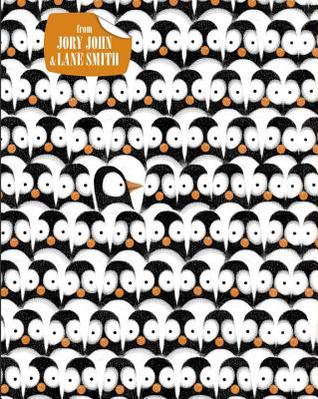
John, Jory. Penguin Problems. illustrated by Lane Smith.
Random House Books for Young Readers, 2016. 

The William Hoy Story

I am a huge baseball fan, so I knew I would love this biography about William Hoy, a professional baseball player who struggled because he was deaf. On top of his teammates and other teams shunning him because of his disability, he couldn't hear the umpires. He works to have the umpires use hand signals for the calls. This changed the way the game of baseball was played. 

This amazing biography teaches perserverance, and is a great read for any student that loves baseball or biographies. 


It was hard to make my top ten choices, because so many great books have been written. What was your favorite picture book you read in 2017?

Friday, February 2, 2018

Bluebonnet Club and A Little Book Tasting

#ReadYourWorld

One of my favorite things to set up is a book tasting in the library. One of the third grade teachers approached me last week to discuss a unit in Social Studies over different cultures. She asked if we could do a book tasting. I was so excited!! So, of course I said YES!! 

I had a table for each of the following types of books: nonfiction, biography, traditional literature, picture books, and chapter books. All of the books were about a different culture, or had a character from a different culture. The students had a sheet where they could record books they want to read later. 

Students look at biography books about people from
other countries, or another culture. 

This student looks through a biography about a female architect from the
same country her mom grew up in.
So many students wanted to check out the books, we decided to let the teacher check them all out and leave them in the classroom for a few weeks. 

Bluebonnet Club

Each year, books are chosen to be a part of the Texas Bluebonnet List. Students in grades 3rd - 5th at our school read at least 5 of the books in order to be a part of the Bluebonnet Club. In January, we meet as a group in the library to discuss the books and vote on our favorite book from the list. 


I bring the dessert and drinks, and the kids bring their lunch. It is a HUGE deal to get to eat their lunch in the library. The kids had lots of fun discussing and debating which of the 20 books were the best. 

Students conduct the voting online. 
This year, 24 third, fourth, and fifth graders took part in the club and were given a vote. The winner for our school was the book SOAR by Joan Bauer. This was one of my favorites, as well.

Bauer, Joan. SOAR. Viking, 2016.

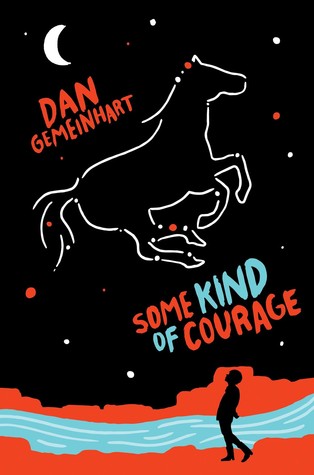
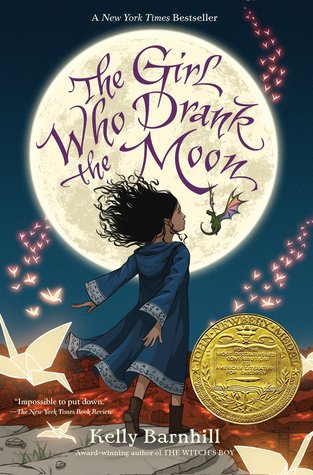
I was very happy that coming closely in second were also two of my other favorites from the list: THE GIRL WHO DRANK THE MOON by Kelly Barnhill and SOME KIND OF COURAGE by Dan Gemeinhart. You don't think my book talks had anything to do with this, do you?! 


Wednesday, January 24, 2018

Nonfiction with 4th and 5th grade

A couple of weeks ago, I was sitting in a vertical planning meeting with 4th and 5th grade teachers. They mentioned that they needed to do more with nonfiction.  That is where I come in! We started planning immediately.

4th Grade

The 4th grade teacher mentioned that her students were specifically having trouble making inferences with nonfiction text. We scheduled a day/time for each of her classes, then started planning our lesson. We decided to create a Nearpod lesson, which is an edtech tool where teachers can create interactive lessons. The lesson shows on the students device screens (we use Chromebooks) and the teacher can give immediate feedback. 

I was in charge of finding the nonfiction passages and the questions. We reviewed making inferences, then we practiced together. We used text clues + schema to come up with our inference. 


I made a note taking sheet for students to fill out while they found clues in the story, plus writing down their schema. 


At the end of the lesson was a short quiz that students completed. I was able to send them their scores immediately after completion, and students could see what they answered correctly or missed. 

5th Grade

The 5th grade ELA teacher mentioned that she needed her students to have a better understanding of:
  • the different types of nonfiction 
  • text features
  • purposes of text features
I decided to pull books and magazines to allow the students to have examples in their hands. We reviewed the types of nonfiction, and in groups, students sorted out their books/magazines into types of nonfiction. We discussed features of biography, procedural, magazines, newspapers, and informative texts. 

Then, I showed examples of types of text features commonly found in nonfiction texts. This part was a review, but then we went deeper and discussed how each type of text feature helps us comprehend the nonfiction text. 

The final piece was for the students to find examples of text features in their books and magazines at their tables. They added the examples to a collaborative board in nearpod, but had to include specifics on how that text feature helped them as readers. This was the hardest part, and many students had to go back and add specifics. In the end, they got it! 

Collaboration

If you aren't already collaborating with your teachers, please start! Start small, and your collaborative partnerships will grow. 

Start off by asking to sit in on a PLC or a vertical planning meeting. These are perfect places to offer to help out on a skill that the classroom teachers mention their students need more help. 

Co-teaching and collaborating with the teachers have done wonders for our students on my campus. They have 2 teachers in a lesson to help them, monitor, and teach them.