Wednesday, July 12, 2017

Why a Flex Schedule? PART 2

I shared in an earlier post about the changes I made this past school year to the library program and schedule. I was approached by Region 10 and Texas Title 1 Capacity Building Initiative to be interviewed about my collaborative partnerships and my flexible schedule. Their team came to my school and videoed myself and another teacher co-teaching a lesson, then interviewed us both. The video is complete, and I'm very proud of the outcome.


How It Started

My flexible schedule started small my first year as a librarian. Then, as other teachers heard of the collaborative lessons, the partnership grew and now I am almost on a full flexible schedule. Only kinder and first grades come for their 30 minute lessons on a weekly basis. I use this time with the younger students to teach them how to be independent users of the library. 

When I talk about flexible schedule, I've been told several times that it just doesn't work in an elementary school. I'm here to tell you it does work, and it is the best for the students. Start small, find just one teacher that is willing to collaborate with you. Build that trust, and I promise you it will work out in your library too.

I am more than happy to discuss this with anyone that is interested in a flexible schedule. Feel free to contact me and I will do everything I can to help you out.


Saturday, June 17, 2017

LAUNCH Book Study: Week 1

One of my favorite types of professional development is a Book Study accompanied by a weekly twitter chat. This summer, some of the librarians in my district are discussing the book LAUNCH by John Spencer and A.J. Juliani. This past week we finished Chapters 1 and 2 with a focus on our creative approaches.

The best part of the book study is the conversation we have on Twitter. We can communicate from the comfort of our home, or from the beach, during the summer.

One of the assignments this past week was to create an image using Adobe Spark that shows the creative approach we most identify with. If you haven't used Adobe Spark yet, you should try it! It is very user friendly, and you can create beautiful images, flyers, and videos.

I wanted to try something new that I've seen others use: Storify.  Storify allows you to create a social story using your social media accounts. I've been wanting to try it for a while, so I used part of our book study conversation. I love being able to see all the answers here in one story, along with all the images the librarians created.


Creative Approach

In chapter 2, the authors give us a look at the different creative mindsets. I love how they compare creativity to ice cream flavors on their website, there are many different kinds. There are many types of creativity that are not looked at as being creative, but in reality, we are all creative. 

After reading the seven types of creative teachers, I found that I identify most with The Hacker. In the description, The Hacker is described in a positive light: a person that breaks down a system to create something better. I identify with this creative approach because I have not always followed the rules completely to the tee, but I do what I feel is best for the students. 

When I first started my librarian position, my first and top goal was to change the library procedures to best help the students. I admit, when I first introduced the flex schedule and did away with the 30 minutes drop-your-kids-off-and-leave library schedule, a few of the teachers saw me as a rebel. It took a while to convince them that this system was best for the students, even though it wasn't the norm they were used to. And, I admit, I still have a couple to convice, but that's ok. I'm not in this for them, I'm in this for the students. My passion and approach has always been to evaluate the way things are done, and make it best for the students, even if it isn't the way things have always been done in the past.

Spencer, John and A.J. Juliani. LAUNCH: Using Design Thinking to Boost Creatvitiy and Bring Out the Maker in Every Student. San Diego, CA: Dave Burgess Consulting, Inc., 2016. 

Wednesday, May 31, 2017

Why a Flex Schedule?

One of the biggest changes I made this school year to my library program was to move to a flexible schedule. I had several people backing me up, including my principal and library director, but unfortunately had some people tell me it didn't work in an elementary school. Well, I am here to tell you it does work and it works AMAZINGLY well in an elementary school.

I've been asked a few times this year why I went to a flexible schedule. I was recently approached by my library director and Region 10 to talk about the importance of collaborative partnerships and having a flex schedule in an elementary library. I admit, this was WAY out of my comfort zone, but I wanted to advocate for librarians.  The video isn't complete yet, but hopefully will be soon.

I was interviewed about my collaborative partnerships and my role as an instructional partner. The video will focus on how library programs are mentioned in the new ESSA (Every Student Succeeds Act).

This was the part where I was most nervous!
However, I'm not writing this blog to tell you about how I was nervous during the interview on tape, I want to tell you why I chose to go to a flexible schedule, and tell you that you can too. 

Collaborative Partnerships

A collaborative partnership with teachers is an imperative part of a school library program.

I started my first collaborative partnership when I asked a teacher if I could do a mini-lesson with her students using padlet. Other teachers in that grade level got word of the lesson, and wanted their students to learn also. Then a collaborative partnership was born. It started small, but has grown immensely. Sometimes the teacher approaches me regarding a skill the students are having trouble with in class, and sometimes I see a project is coming up for a grade level in the curriculum.  

I always try to be respectful of teachers’ time, so I may make a quick mention of something I can help them with in the teachers lounge, or I might send an email. I also made sure to tell them thank you and mention the collaborative project in front of another teacher, which usually opened up an opportunity to collaborate again.

When you have that collaborative partnership with teachers, the lessons can be so much more engaging for the students by bringing in more resources and technology. Also, when the teacher and librarian are modeling collaboration, the students see the collaboration and it helps change the learning environment in the entire school. Plus, you have the classroom teacher and the librarian sharing their expertise and talents.

Self Checkout 


One of the questions I get most often is: When do the students check out if they don't have come as a class for checkout time? 


In order for students to have access to the library when I’m involved with a lesson, the students use the self-checkout station. The first 2 weeks of school, every student learns to use this station to be able to independently checkout. Teachers can send students individually or in groups as class time permits.


Region 10 filmed some of my first graders using the self checkout station.

Instructional Partnership


I believe the most important role of the school librarian is to be a teacher and instructional partner. The library is typically the largest learning space in the building, and has access to the most learning resources available to the students.  The librarian should understand the curriculum and provide support for the classroom teacher. When the classroom teacher and the librarian plan together and share the instructional duties, you have doubled the students learning opportunities.

Flexible Schedule is so worth it, even if it is a bit hard to get started. If you can just get one teacher on board to collaborate with you, you will be amazed at what more you can do. If you are interested in starting a flexible schedule at your school, feel free to reach out to me. I'm here as a resource and am happy to help! If you need ideas to get your teachers on board, search my blog for some of the activities I have done with my classes. Also, Nancy Jo Lambert's blog is a great resource as well. She was my motivation!


Wednesday, May 17, 2017

4th Grade Book Recommendations


We are wrapping up the school year, and it is time to start collecting library books for the annual inventory. It is always a sad time for me when I have to close the library, but the library has to be prepared for summer. The students always ask me what they will do if I'm closed. The 4th grade teacher and I put our heads together and came up with the idea that the students should make recommendations to each other for their summer reading.

The padlet was created for the students to add their book recommendations, and I have been blown away with how many students have added their favorite books. This link will be available to the students all summer. Students will be able to look for a book recommendation as well as add new books that they recommend.


Made with Padlet

It makes me so happy to see the students excited about books and recommending to each other. They come to me often when they need something to read, but having your peer recommend a book can be more meaningful.

Monday, May 8, 2017

Mo Willems - An Author Study with Kindergarten

Do your students love Piggy and Elephant as much as my students do? Every year, the first few weeks of school, my kinders and firsties ask, "Where are the Piggy and Elephant books?"  Not only do my students love these books, but I am a huge fan of Mo Willems and his writing. I love the way he uses illustrations to show the characters feelings and emotions. He is a GENIUS when it comes to writing for children. 

I decided this year to go ahead and teach a unit over Mo Willems book to my kinder students, so next year they would be more familiar with all of his books, not just sweet, funny Piggy and Elephant. 

We started off with DON'T LET THE PIGEON DRIVE THE BUS! It had the kids rolling with laughter! After reading, we discussed all the different emotions that pigeon felt during the story when he couldn't drive the bus. 


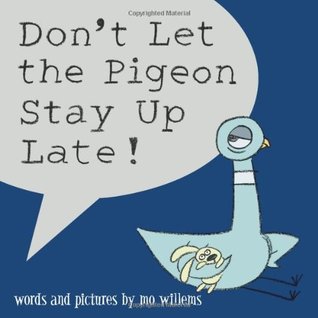
The next week, we read DON'T LET THE PIGEON STAY UP LATE! The students noticed right away that the bus driver was now in his pajamas! After reading, we compared this story and last week's story. Then we went to the tables and students came up with 4 reasons to give their parents why they should be allowed to stay up late. Their answers were hilarious! One student said he should stay up late because he wanted to eat hot dogs. 


The following week we moved on to the Elephant & Piggie series and started with ELEPHANTS CANNOT DANCE! I love Mo Willems's message in this book, that we should never say we can't, but should always try. After reading, we played the Elephant & Piggie Dance Game and the students learned some new dance moves. 


The next week I introduced the students to my favorite, KNUFFLE BUNNY! Do you say it nuffle or k-nuffle? Trixie has an argument with another little girl in the KNUFFLE BUNNY, TOO about the pronunciation of the bunny's name. While reading KNUFFLE BUNNY, the students spied the pigeon on a couple of pages, then we discussed times we had lost something that was important to us. 
The final week of the unit, I read a Mo Willems biography to the students. They drew a picture of Mo Willems and added a fact or two that they learned about him. Most of them drew him in a tshirt with the pigeon on the front. 


Since this unit, the kinder students have all wanted to check out and read the other Mo Willems books. They have stayed checked out since! 

Sunday, April 30, 2017

LITTLE CAT'S LUCK by Marion Dane Bauer

Little Cat's LuckLittle Cat's Luck by Marion Dane Bauer
My rating: 4 of 5 stars

This book has a charming cover which appealed to me from the beginning. I love free verse novels, so I was excited to read this book, and it did not disappoint.

Patches, the little cat, is mesmerized by a falling golden leaf, and she falls out of the window. Wondering off following the leaf, Patches loses her home and has trouble finding her way back. On a mission to find the perfect special place, Patches meets an unlikely friend. Gus is the meanest dog in town, but why is he so mean?

Kids, 2nd - 4th grade, will love this free verse novel, especially if they are fans of animals. I am pleased that this on our Texas Bluebonnet list this year.

Some other reviewers complained that the human characters did not have their cat spayed or microchipped. Remember, this book is written for elementary age children that will fall in love with the animal characters. This is a must for every elementary school library.

View all my reviews